At Camp Deer Run, we teach campers and staff about safety with the acronym S.T.O.R.M.
Learn more about the new state safety requirements for 2026 and how Camp Deer Run has responded.
Have questions? See the answers to some of our most common safety questions, or send us your own!
We work hard to ensure that Camp Deer Run is a safe place. There are plenty of storms in the world, and we want to be a shelter from those storms. We train our Staff and instruct our campers based on a simple acronym: STORM. STORM stands for Stop Bullying; Touch, Talk, Territory; Obvious Safety Risks; Rule of Three; Modesty. With cooperation from campers and Staff, we can prevent a STORM at Camp Deer Run.
Bullying is any intentional hurtful act committed by one or more persons against another. The main types of bullying include physical (punching, hitting, shoving), verbal (name calling, hurtful teasing, taunting) and relational (exclusion, humiliation, blackmailing). No form of bullying will be tolerated at Camp Deer Run.
Bullying is generally a pattern of behavior rather than a single event. Staff are trained to be aware of these behaviors and to intervene immediately. If bullying continues after intervention, parents will be notified and appropriate measures will be taken to rectify the issue.
Campers and Staff must abide by boundaries in touch, talk and territory - that is, their physical interactions, their verbal interactions and where they go.
Touch
There are appropriate and inappropriate physical interactions among campers and Staff. For the safety of all, campers will be instructed on what types of physical interaction are appropriate and inappropriate at Camp. All Staff have been trained on these guidelines.
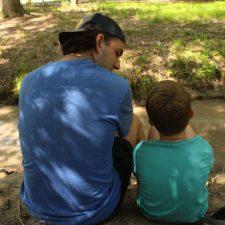
Some examples of appropriate touch are high fives, quick side hugs or putting arms around shoulders. Examples of inappropriate touch include sitting in laps, hand holding, kissing and of course, any touching in areas that would be covered by a bathing suit, etc.
Talk
Campers and Staff will refrain from speaking with vulgar language, hateful speech, racial epithets, curse words, by-words and any type of sexual references. Instead, campers and Staff should speak with positive words of encouragement that build others up. As Colossians 4:6 says, “Let your conversation be always full of grace, seasoned with salt.”
Territory
The living areas of the campground are separated into a boys’ side of camp and a girls’ side of camp. It is not appropriate for Staff or campers to be on the opposite gender’s side of camp. If there is a legitimate need for going across camp, it is necessary to be accompanied by a Staff member of that gender.
It is not appropriate for campers to visit Staff-only living quarters for any reason. Staff will not allow or invite campers into Staff-only living areas.
Maintaining touch, talk and territory boundaries is a vital part of keeping our campers and Staff members safe.
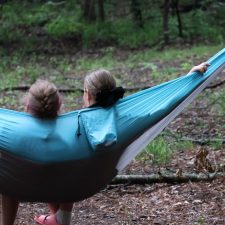
Staff are trained to be alert at all times for common sense safety risks. Campers can sometimes get carried away horseplaying or creating silly games that are not always safe, like swordfighting with sticks or swinging each other around in hammocks. Staff are always looking for obvious safety risks such as these and are trained to intervene.
To avoid one-on-one situations, we use the Rule of Three. Simply put, there should be three people together, not two and not one. Campers generally do not need to go alone, and they don’t need to go in pairs. It is always safest for campers and Staff to be in groups of at least three. Of course, in supervised situations, campers may go alone to the restroom or to do other quick, simple tasks.
One-on-Ones
It is not appropriate for a Staff member to be completely alone with any camper for any reason. Staff members are trained to recognize and avoid these moments by moving into the open where they are in plain sight of other campers and Staff. If there is a need for one-on-one counseling, it must happen out in the open (in plain sight), not inside or behind a building. This is for the protection of both the campers and Staff.
Dress Code
We all have to get dressed, and we want to dress in a way that mirrors God’s design and not that of the outside world. With that in mind, please bring clothes that are suitable to run and play in the woods and that “glorify God with your body.” 1 Corinthians 6:20
The following guidelines apply to campers and Staff:
Tight or form-fitting attire should not be worn.
Shorts are allowed, but must have at least a 5 inch inseam.
Loose fitting T-shirts are ideal.
Sleeveless shirts that are neatly and closely cut under the arm are permitted.
Tank tops are not permitted.
Shoes must be worn at all times.
Flip Flops and sandals are permitted only to the pool and bathhouse.
Crocs and other slip-ons can be worn but are not allowed during active camp activities.
Logos or designs on attire may not include vulgar language or promote alcohol, tobacco, drugs or anything else that does not uphold the values of the Camp.
Changing and Nudity
During changing times, everyone’s privacy will be respected, and no one should call attention to themselves or others while naked or changing. Campers may change discreetly in the cabin, or they may go to the bathhouse to change if they are more comfortable with that option. Regardless, campers will never be made to feel uncomfortable about where or how they change clothes. When changing clothes in the cabin, Staff will always change discreetly and with an effort not to be exposed to the campers. Staff will also immediately redirect campers who may try to be silly or playful while they or others are changing clothes.
There are no acceptable activities that occur in the nude at Camp Deer Run. Sometimes young people may find it funny to do certain activities naked, like swimming, but this is never acceptable at Camp Deer Run. Staff are instructed to avoid and immediately intervene in any kind of nude activities.
There are no nude activities at Camp Deer Run.
Very strong restrictions have been placed on buildings that are located in a FEMA-designated floodplain or within 1000ft of a designated floodway. A small portion of our property is within a designated floodplain, but none of our buildings are in that area. There are no floodways on Camp property.
Camp Deer Run is at extremely low risk of any flooding emergencies. Regardless, our staff monitors weather reports for potential risks, and we have thorough emergency action and evacuation plans in the very unlikely event of a major flood at Camp. Our Staff is fully trained to execute these plans, and our campers will also receive a safety orientation on these plans at the beginning of each session.
The state of Texas requires all Youth Camps to disclose to parents and guardians the existence of any floodplain located on or adjacent to camp property. All parents will be required to affirm that they have read and acknowledged this disclosure in their registration account before their camper’s session.
Camp Deer Run’s Emergency Action Plans, including a more detailed floodplain map, are also available to parents in their registration dashboard, on the Camp Deer Run app, and in their Bunk1 account.
Camps are also now required to have a fiber-optic internet connection. Camp Deer Run has been connected to fiber-optic internet for the past few years, so no changes were needed.
In addition to fiber-optic internet service, camps must have a backup internet connection. We have implemented a moveable backup satellite internet connection via Starlink.
Camp Deer Run has had EAPs in place, but the new legislation included major changes to EAP requirements. We have revised and updated all of our EAPs, and they were approved in April. These comprehensive plans, including flood plain maps, are available to parents in their registration dashboard, on the Camp Deer Run app, and in their Bunk1 account.
We take extensive measures to ensure the health and safety of our campers. We have at least one medical staff member on site at all times (EMT, Nurse, or Doctor). Campers are supervised at all times, and our Summer Staff are thoroughly vetted, background checked, and trained on child safety.
We are fully compliant with all of the new safety measures passed by the Texas state legislature in 2025, and are licensed by the Department of State Health Services. Parents can see our comprehensive Emergency Action Plans, including flood plain maps, in their registration dashboard, on the Camp Deer Run app, and in their Bunk1 account.
Every summer we hire 65+ college-aged young adults to serve on our summer staff. These staff go through a thorough application, interview, and background check process. Before the summer, all the staff are trained extensively in camper safety, including abuse prevention and recognition. Our staff are also highly trained on our emergency action plans and procedures. We only hire staff who are practicing Christians who are members of a church body.
Camp Deer Run is at extremely low risk of any flooding emergencies. Regardless, our staff monitors weather reports for potential risks, and we have thorough emergency action and evacuation plans in the very unlikely event of a major flood at Camp. Our Staff is fully trained to execute these plans, and our campers will also receive a safety orientation on these plans at the beginning of each session.
The state of Texas requires all Youth Camps to disclose to parents and guardians the existence of any floodplain located on or adjacent to camp property. All parents will be required to affirm that they have read and acknowledged this disclosure in their registration account before their camper’s session.
Camp Deer Run’s Emergency Action Plans, including a more detailed floodplain map, are available to parents in their registration dashboard, on the Camp Deer Run app, and in their Bunk1 account.
In the case of any major safety risk, emergency situation, or natural disaster, all parents will be notified by email as soon as possible. Parents will also receive text message updates and push notifications if they are enrolled to receive text messages and push notifications through the Camp Deer Run app. To learn more about enrolling for text or push notification updates, visit www.campdeerrun.com/app.
In the event of an evacuation we will also contact parents via phone call to ensure that every camper is accounted for.
Camp Deer Run’s Emergency Action Plans, including a detailed floodplain map, are available to parents in their registration dashboard, on the Camp Deer Run app, and in their Bunk1 account.
Great! We are grateful for your concern and preparation, and we are happy to partner with you in protecting your camper’s safety, health, and overall well-being. We would love to have a conversation with you about our safety policies and address any questions or concerns you may have.

The safety and well-being of every camper is our highest priority. Our goal isn’t just to do the bare minimum according to the law, but to ensure that every camper and their parents to feel safe, secure, and well cared for during their time at Camp.
If you have a concern about health or safety at Camp Deer Run, we genuinely want to hear from you. Your feedback helps us identify blind spots, correct problems, and make Camp safer for every child who comes through our gates. Please reach out to us directly at office@campdeerrun.com or 903-629-7165.
If you have a complaint you feel should be reported directly to the Texas Department of State Health Services, you are encouraged to do so using the link below. If the link isn’t working, you can also copy the following url into your address bar: https://www.dshs.texas.gov/youth-camp-program/complaint-process-youth-camp-program